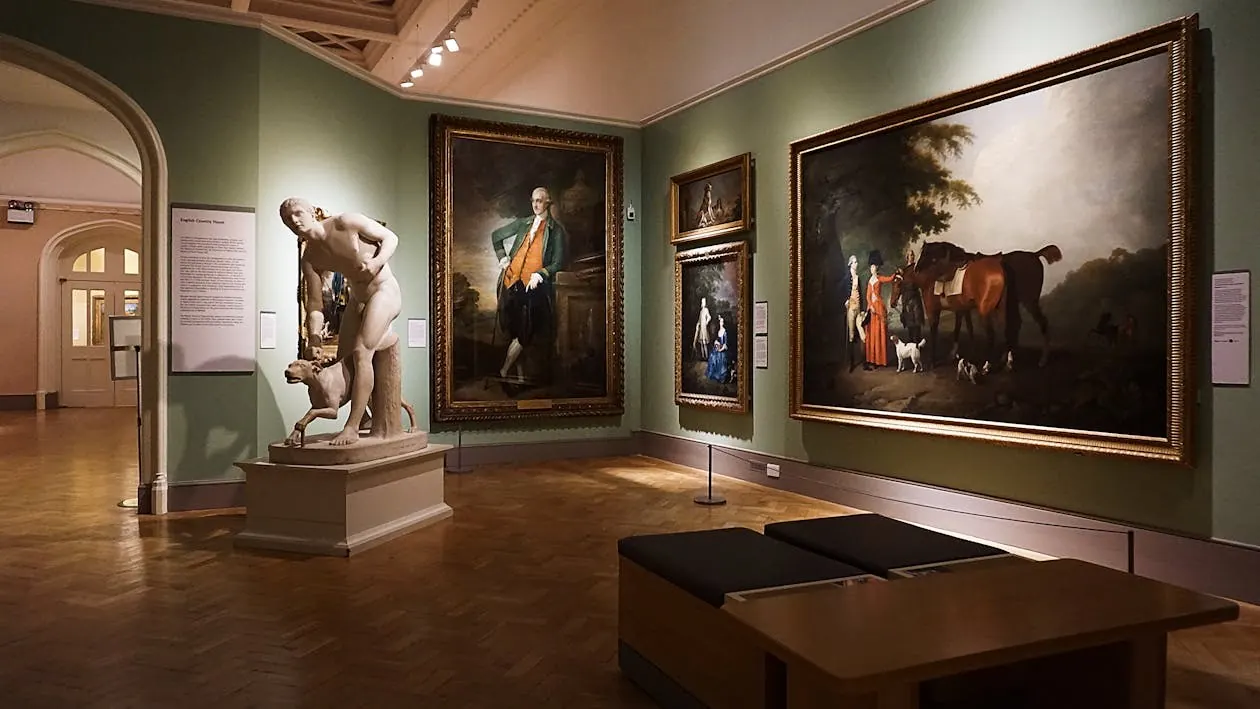
In summary: Organizing an artistic-cultural event in Italy in 2026 costs between 3,000 EUR (micro-vernissage) and 200,000 EUR+ (major festivals), with artist fees absorbing 40-70% of the budget. Art Bonus (65% tax credit), FUS and regional grants can cover 30 to 70% of eligible costs.
- 2026 budget range: from 3,000 EUR (micro-vernissage) up to 500,000+ EUR (major film festivals)
- Critical line items: artist fees 40-70%, staging and SIAE 10-25%, artwork insurance 0.1-0.5% of value
- Funding: Art Bonus at 65% tax credit, FUS around 380M EUR annually, regional grants covering 30-50% of eligible costs
- Cultural sponsorship: ~200M EUR/year in Italy according to the Symbola "Io Sono Cultura" 2025 report
An artistic-cultural event in Italy costs between 3,000 and 200,000 euros in 2026 for most formats, with artist fees and staging together absorbing over half of the total budget. This guide breaks down every cost item by type — exhibitions, festivals, classical concerts, theater, performances — and shows how to combine public funds and private sponsors to cover up to 70% of the expense.

What are the main cost items of an artistic-cultural event?
Every cultural event has a distinctive cost structure. There are nine recurring line items that absorb the entire budget in predictable proportions.
Artist fees and talent compensation (40-70% of budget)
Artist compensation is the single largest line item of a cultural event. For visual arts, average fees range from 500-3,000 euros for a group exhibition up to 5,000-25,000 euros for a solo show. Musicians' fees start at 200 euros per evening for accompanists and rise to six-figure amounts for international stars, as documented in the SIAE Performing Arts Yearbook 2024.
SIAE rights and licenses
SIAE (Italian collecting society for copyright) manages copyright for music, theater and visual arts. For a live music event, fees are calculated between 6% and 10% of box office revenue or via a flat rate. An event with live music for 200 people involves SIAE charges of between 150 and 800 euros.
Staging and set design (10-20%)
Staging includes exhibit structures, artistic lighting, panels, pedestals and set design. For a medium-sized exhibition (10-20 works) the average cost is 5,000-20,000 euros. A multi-stage festival can exceed 50,000 euros in staging alone.
Artwork insurance
The insurance premium for transport and display ranges between 0.1% and 0.5% of the insured value. For works with a total value of 500,000 euros, the premium ranges between 500 and 2,500 euros. For museum-grade works, costs rise significantly.
Transportation and handling
Transportation requires specialized vehicles, custom packaging and qualified personnel. Domestic transport of a lot for a medium-sized exhibition costs 2,000-10,000 euros. For international shipments, costs multiply by 3-5 times, especially with customs procedures and climate-controlled packaging.
Catalog, communications and PR
The catalog costs on average 3,000-15,000 euros for print runs of 500-2,000 copies. Communications (press office, social, media buying) account for between 10% and 20% of the budget according to Assocom, with a recommended minimum investment of 3,000-5,000 euros. To understand how to structure cultural PR work, see the guide on the difference between press office and public relations.
How does the budget vary by type of cultural event?
The main formats have very different cost structures and ROI. The comparative table summarizes the five dominant formats in the Italian market for 2026.
| Event type | Base budget | Mid-range budget | High-end budget | Critical items | Typical ROI |
|---|---|---|---|---|---|
| Art exhibition | 5,000-15,000 € | 30,000-80,000 € | 150,000-500,000 € | Transport, insurance, staging | Tickets + sponsors + Art Bonus |
| Classical concert | 8,000-20,000 € | 35,000-90,000 € | 100,000-300,000 € | Orchestra fees, venue, SIAE | Tickets + FUS + sponsors |
| Film festival | 25,000-50,000 € | 80,000-200,000 € | 300,000-1,500,000 € | Film rights, juries, hospitality | MiC + grants + tech sponsors |
| Theater season | 15,000-35,000 € | 50,000-120,000 € | 150,000-400,000 € | Productions, venue, staff | FUS + subscriptions + schools |
| Contemporary performance | 3,000-10,000 € | 15,000-45,000 € | 60,000-150,000 € | Technical production, space | Foundation grants + Creative Europe |
Source: elaboration based on data from Federculture, SIAE and industry operators (2024-2025).
What public funds can be requested for a cultural event?
The Italian system offers six main public and semi-public funding instruments. Knowing and being able to activate them drastically reduces the financial burden on the organizer.
Art Bonus: 65% tax credit
Art Bonus (Italy's cultural donation tax credit), made permanent by the Budget Law, provides a 65% tax credit for charitable donations supporting culture. Businesses, institutions and private individuals supporting the maintenance, restoration and enhancement of public cultural assets can benefit. From 2014 to 2025, over 900 million euros have been raised according to the official portal artbonus.gov.it.
Single Fund for Performing Arts (FUS)
FUS (Italy's Single Fund for Performing Arts) is the main state instrument for live entertainment. In 2025 the allocation was approximately 380 million euros, distributed among music, theater, dance, circus and traveling shows. Applications are submitted to the Ministero della Cultura (MiC) according to annual calls.
Regional and municipal grants
Each region has its own support instruments. Lombardy, Emilia-Romagna, Tuscany and Lazio are among the best endowed. Grants typically cover 30-50% of eligible costs, with contributions ranging from 5,000 to 100,000 euros per single project.
Banking foundations
Banking foundations (Compagnia di San Paolo, Cariplo, CRT) collectively disburse approximately 1 billion euros per year in culture and art according to ACRI. Modalities vary: periodic calls or direct requests.
Private sponsorships
Cultural sponsorship is worth approximately 200 million euros annually in Italy according to the Symbola "Io Sono Cultura" 2025 report. The key is building packages with tangible benefits: visibility, hospitality, exclusive content.
Creative Europe 2021-2027
The EU Creative Europe program has an allocation of 2.44 billion euros. Contributions cover up to 60-80% of costs for projects with partners from at least 3 EU countries.

How to obtain reliable quotes from suppliers and agencies?
A reliable quote for a cultural event must include six essential elements. Their absence signals lowball quotes that will explode during execution.
- Line-by-line breakdown — no lump sum "turnkey event organization"
- Explicit contingency fund equal to 5-10% of the total (industry standard)
- Realistic production timelines — events planned 6-9 months in advance save 15-25%
- SIAE clauses and permits specified — organizer vs supplier responsibilities
- Liability insurance + artwork insurance separated with declared limits
- Verifiable references from at least 3 similar events produced in the last 24 months
For budgets above 50,000 euros, it is good practice to request at least 3 comparable quotes and ask the selected supplier for a monthly cash flow distributing the expense across the production months. On the topic of comparing agencies, the guide on criteria for choosing an event agency in Milan and the list of common mistakes when choosing an event agency are useful.
What mistakes to avoid when preparing the budget?
The most frequent mistakes in building the budget of a cultural event are six, stemming from systematic underestimation of less visible items.
- Underestimating transport and insurance: they can account for up to 15% of the budget and are often forgotten in early stages
- Not planning a contingency fund: golden rule 5-10% of total for emergencies
- Relying on a single funding source: diversification is essential for sustainability
- Cutting back on communications: invest at least 10-15% of the budget to ensure audience
- Not monetizing the archive: photos, videos and digital catalogs have value beyond the event's closure
- Ignoring tax incentives: many organizers fail to leverage Art Bonus or regional grants due to lack of information
Planning 6-9 months ahead with a line-by-line budget, a 10% contingency fund and diversified funding sources remains the most robust combination to close a cultural event at break-even or in profit. For a methodological comparison with the corporate world, the guide on the average cost of organizing a corporate event in Italy is useful.
Frequently Asked Questions
How much does it cost to organize an art exhibition?
The cost of an art exhibition ranges from 5,000-10,000 euros for a small show in a private gallery, 30,000-80,000 euros for a medium-sized exhibition in public spaces, up to 200,000 euros and above for large exhibitions with internationally loaned works. The most impactful items are transport, insurance and staging. A photography exhibition with original prints in a partner gallery starts at around 8,000 euros total.
What are the costs of an independent film festival?
An independent film festival lasting 3-5 days in Italy costs between 80,000 and 200,000 euros in the mid-range, with peaks above one million for major festivals (Venice, Turin, Rome). Critical items are screening rights (15-30,000 euros), hospitality for juries and directors (20-40,000 euros), venue and screenings (15-25,000 euros), communications (15-30,000 euros). MiC and regional grants on average cover 40-50% of eligible costs.
How do you obtain public funding for cultural events?
Public funding is obtained through three main channels: MiC calls (FUS for live entertainment and notices for special projects), regional and municipal calls open 1-2 times per year, and Art Bonus as a tax incentive for donors. The organizing entity must be registered, submit a detailed project, analytical budget and timeline. Response times range from 60 to 180 days: applying at least 6 months before the event is essential.
What is the minimum budget for a classical music concert?
The minimum budget for a classical music concert starts at 8,000-12,000 euros for a solo recital in a mid-sized hall (200-400 seats) with an emerging national artist. It includes soloist fee (2,500-5,000 euros), hall rental (1,500-3,000 euros), SIAE and rights (400-800 euros), communications (1,500-2,500 euros), technical staff and hospitality (1,000-1,500 euros). A 40-piece symphony orchestra instead requires budgets above 35,000 euros per evening.
How much does an agency charge to organize a cultural event?
An event agency fee in Italy accounts for between 10% and 20% of the total budget, with a minimum of 3,000-5,000 euros for small projects and monthly retainers for recurring festivals. Serious agencies offer itemized contracts, measurable KPIs (visitors, media coverage, sponsor ROI) and a contingency safeguard clause. For events above 50,000 euros in budget, the agency fee is repaid by supplier savings and intercepted funding.
How to optimize a cultural event budget?
Budget optimization goes through six levers: advance planning (6-9 months, 15-25% savings), co-production with other institutions (halves transport and insurance), non-conventional spaces (-50/70% on rental), strong digital presence (1,000-3,000 euros to reach tens of thousands of people), cultural volunteering with universities and academies, diversified revenue combining ticketing, merchandising, sponsors, public contributions and hospitality.
Planning an artistic-cultural event?
MigliorAgenzia is the independent editorial project that compares methodologies, evaluation criteria and quotes from Italian event agencies with no conflicts of interest. Discover the MigliorAgenzia project to learn how to read a quote, which funding to activate and how to set up a brief, or browse all the operational guides on the blog to explore events, PR and cultural communications.
Related insights on event organization
- Average cost of organizing a corporate event in Italy [2026] — comparison with the corporate world
- How to organize an event: step-by-step guide from A to Z — the operational method in 8 phases
- The main marketing, communications and PR events of 2026 — reference calendar
- What services an events and PR agency offers — understanding what an agency fee really includes
- Difference between press office and PR — how to structure cultural communications
- Criteria for choosing an event agency in Milan — evaluation checklist
- Common mistakes when choosing an event agency — what to avoid in the brief phase
Sources and References
- Ministero della Cultura (MiC) — Data, statistics and FUS calls
- ISTAT — Cultural statistics and participation
- Federculture — Annual report 2024-2025
- SIAE — Performing Arts Yearbook 2024
- Symbola-Unioncamere — "Io Sono Cultura" 2025 report
- Art Bonus — Official MiC portal
- ACRI — Annual report on Italian banking foundations
- Piedmont Cultural Observatory — Annual reports
- Fondazione Musica per Roma / IEG — Event economic reports
- Creative Europe 2021-2027 — EU culture calls
- Assocom — Italian association of communications companies


![How Much Does an E-Commerce Cost in Italy: Complete Guide to Real Costs [2026]](/media/covers/ma-google-ads.webp)